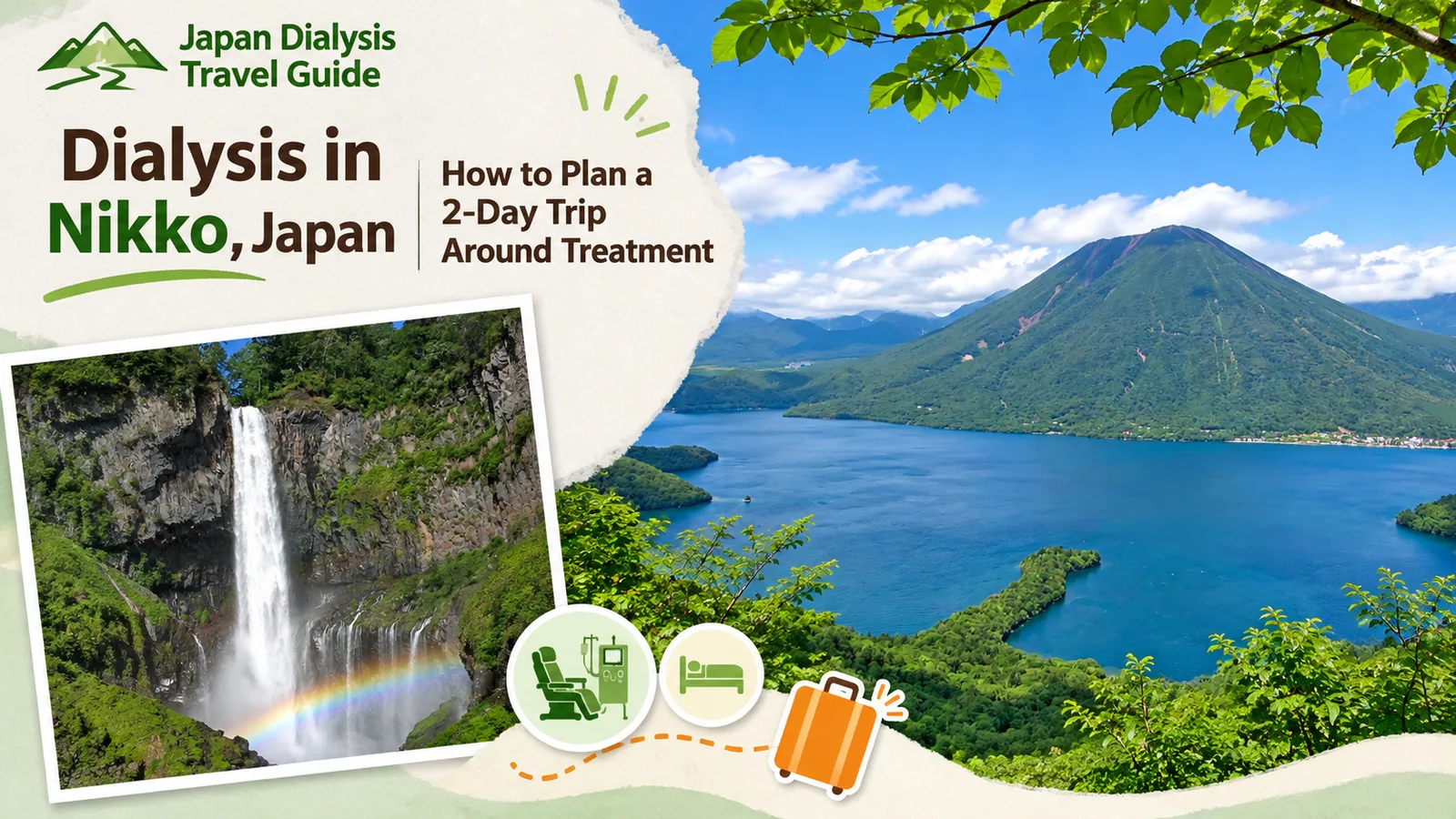
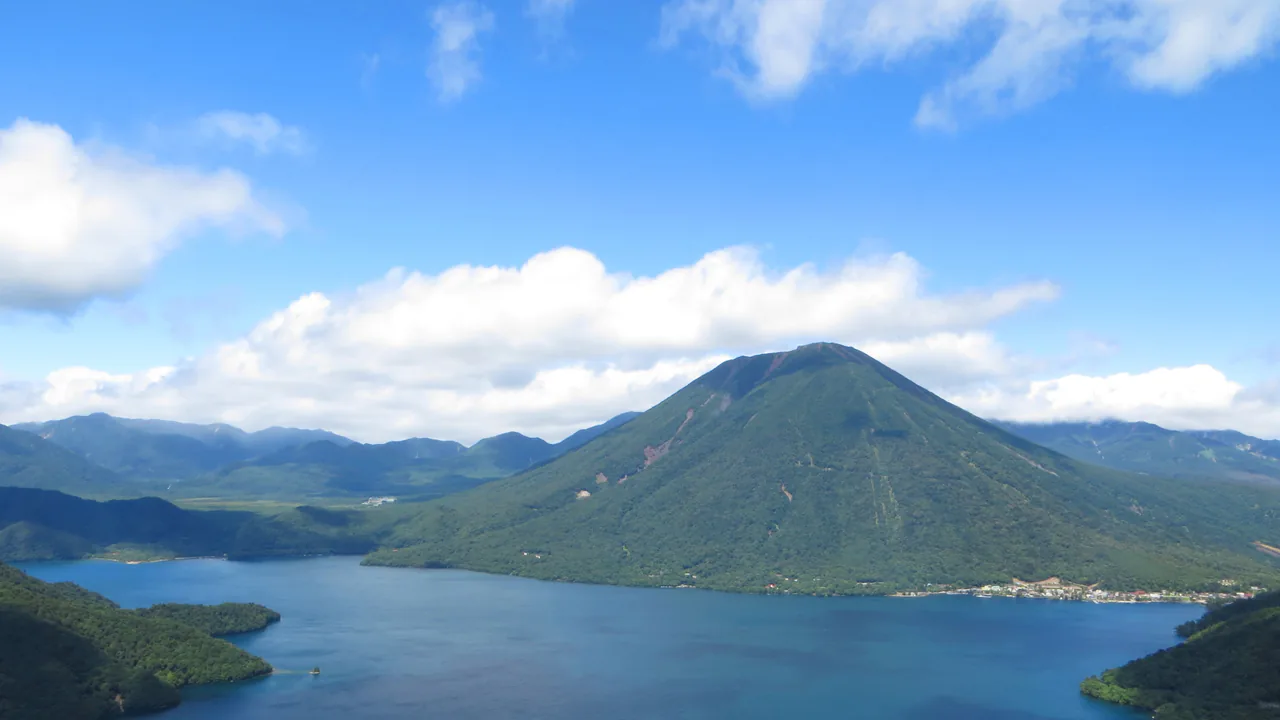
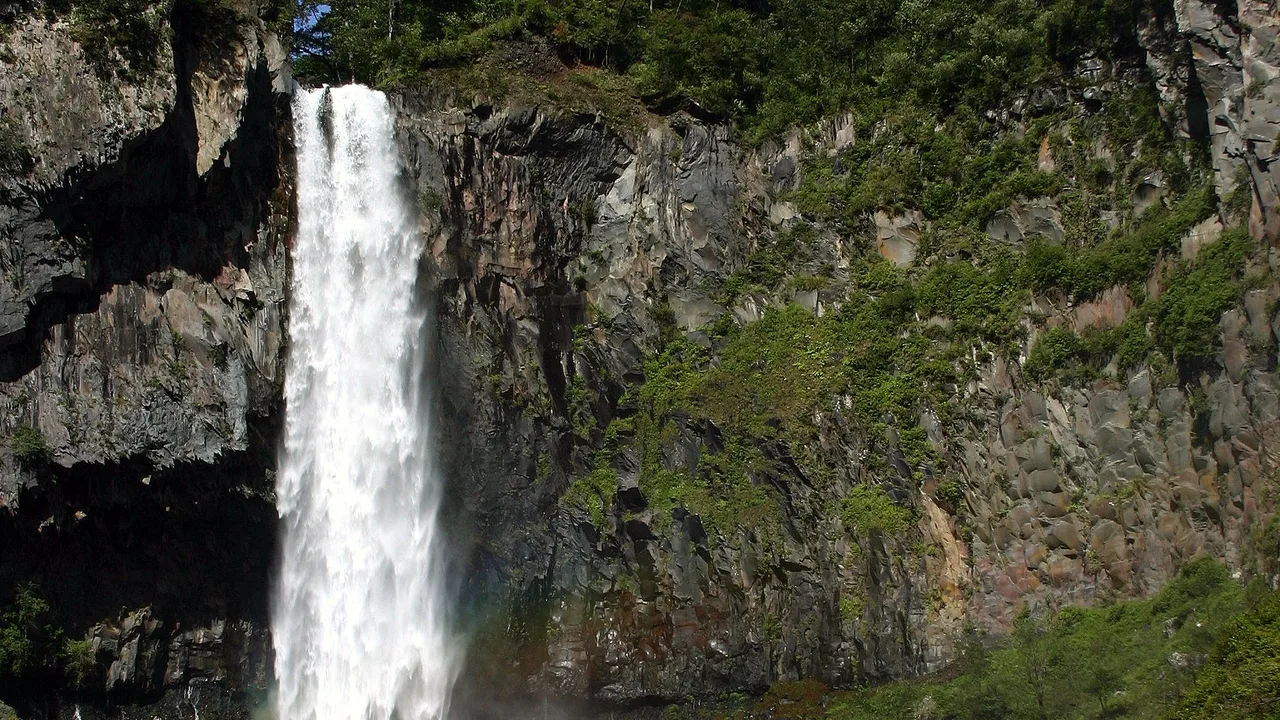
Nikko is one of Japan’s best-known travel destinations, combining UNESCO World Heritage sites with the natural scenery of Lake Chuzenji, Kegon Falls and Oku-Nikko.
For travelers who need hemodialysis during a trip to Japan, Nikko may be possible to include in an itinerary only after dialysis arrangements have been confirmed. Acceptance, treatment dates, required medical documents, language support, costs and payment methods must be checked directly with the facility before travel bookings are finalized.
This guide explains how an international visitor can approach a two-day Nikko trip by treating dialysis as a fixed point, then arranging accommodation, transport and sightseeing around it.
Start by asking whether an overseas patient can be considered
DMU Nikko Medical Center publishes Japanese guidance for travel and temporary dialysis. Its domestic process asks patients to consult their usual dialysis facility, obtain their physician’s approval and contact the hospital’s coordination center, in principle, at least four weeks before the planned dialysis date.
The public English pages confirm the hospital’s name, location and general patient information. They do not clearly state whether the travel-dialysis application process can be completed in English or what conditions apply to a person living outside Japan.
Before building a sightseeing itinerary, ask the facility whether it can consider your request and, if so, whether treatment can be scheduled. Useful questions include:
- Can the facility consider a patient who lives outside Japan?
- Is dialysis possible on the preferred date and at what arrival time?
- Can appointment arrangements and communication during treatment be handled in English or another language?
- What information must be supplied by the home dialysis center?
- Are documents written in English accepted, or is a Japanese translation required?
- What will the treatment cost, and how can payment be made?
- How far in advance must the appointment and medical records be arranged?
The hospital’s four-week period describes its published domestic process. It should not be treated as confirmation that the same timetable or procedure applies to an overseas visitor.
Start the enquiry before non-refundable bookings
An international arrangement may require additional discussion about overseas-patient acceptance, communication, medical records, translation and payment. The traveler’s home dialysis center may also need time to prepare records or respond to questions.
For travel planning, a cautious order is:
ask whether dialysis can be considered → confirm the date, documents, language and payment → then finalize accommodation and major transport bookings.
This is not a guarantee that treatment will be arranged. It is a way to avoid building the rest of the trip around an appointment that has not yet been confirmed.
Think of central Nikko and Oku-Nikko as separate travel areas
“Nikko” covers a much larger area than visitors may expect.
Central Nikko
This includes places such as:
- JR Nikko Station and Tobu-Nikko Station
- the World Heritage temple and shrine area
- Shinkyo Bridge
- Nikko Tamozawa Imperial Villa Memorial Park
Oku-Nikko
This includes:
- Lake Chuzenji
- Kegon Falls
- Senjogahara
- Yumoto Onsen
Official tourism guidance gives about 50 minutes by bus from JR Nikko or Tobu-Nikko Station to the Lake Chuzenji and Kegon Falls area under normal conditions. This is a planning estimate, not a guaranteed journey time for a particular date.
For a two-day trip that also includes dialysis, choosing either central Nikko as the main focus or an itinerary that includes Oku-Nikko is usually more realistic than trying to cover every area.
Plan in this order: dialysis, accommodation, then sightseeing
A typical leisure trip may begin with a list of attractions and a hotel nearby. When dialysis is part of the itinerary, reversing that order makes the constraints easier to see.
- Identify a facility whose official information mentions travel or temporary dialysis.
- Ask whether your request can be considered and confirm the treatment date and arrival time.
- Choose accommodation around that confirmed schedule and the actual route to the facility.
- Add sightseeing to the time that remains.
Once the treatment time is confirmed, you can judge how much time is available before and after it without assuming that dialysis can simply be fitted into a completed sightseeing plan.
Do not choose accommodation only by sightseeing location
Nikko has accommodation near the stations, the World Heritage area, Lake Chuzenji, Yumoto Onsen and other locations.
When a medical appointment is part of the trip, also check:
- the actual route from the accommodation to the dialysis facility
- the time you must arrive
- where large luggage can be left
- whether a long transfer would be required after treatment
- the route to the next day’s main sightseeing area
The Nikko destination guide brings together published dialysis, accommodation and sightseeing information so that these locations can be compared. A lodging listing does not mean that the property offers medical support or guarantees any special arrangements.
Sample itinerary A: dialysis on Day 1
The first pattern places dialysis on the day you arrive in Nikko.
Day 1
Travel from Tokyo to Nikko
↓
Travel to the confirmed dialysis facility
↓
Dialysis at the confirmed time
↓
Travel to the accommodation and check in
↓
Keep the remaining plans close to the accommodation
Keeping Day 1 simple leaves more room for transport delays and the confirmed medical appointment. If you add sightseeing, choose a place that requires little extra travel rather than planning a separate trip into Oku-Nikko.
Day 2
Use the second day mainly for sightseeing. You might focus on the World Heritage area, central Nikko, or Lake Chuzenji and Kegon Falls. Choosing one main zone leaves more time for the return journey to Tokyo or your next destination.
Sample itinerary B: dialysis on Day 2
The second pattern uses Day 1 for sightseeing and places dialysis on Day 2.
Day 1
Travel from Tokyo to Nikko
↓
Explore central Nikko or Oku-Nikko
↓
Stay overnight
If Lake Chuzenji or Kegon Falls is the main priority, Day 1 may provide the larger block of flexible sightseeing time.
Day 2
Check out and arrange luggage storage
↓
Allow sufficient time to reach the dialysis facility
↓
Dialysis at the confirmed time
↓
Continue to Tokyo or the next destination
Check the route from the accommodation to the facility for the actual day and time of travel. If you stay in Oku-Nikko, do not assume that the return journey will always take the normal published time.
Treat travel time as part of the Oku-Nikko itinerary
Lake Chuzenji and Kegon Falls require additional travel from the stations and central sightseeing area. Road congestion can substantially extend travel times during the autumn foliage season, long holiday weekends and other busy periods.
The Nikko City Tourism Association’s 2026 congestion guide shows that, on its busiest forecast days, travel from the station area to Lake Chuzenji may take 120 minutes or more. The forecast does not include every possible disruption and actual conditions can differ.
If a fixed dialysis appointment is part of the day, avoid a plan that depends on returning from Oku-Nikko at the last possible moment. Check:
- the Tobu Bus timetable and live vehicle information for the travel date
- the official Nikko congestion forecast and road information
- attraction opening hours and last admission
- the return bus and an alternative plan if the connection is missed
Central Nikko may involve fewer transfers for some facility-and-accommodation combinations, but this must be checked against the actual locations and timetable. Oku-Nikko can be grouped into the day with more flexibility when that works better for the confirmed treatment schedule.
International travelers should make three additional checks
1. Language support
An English-language hospital website does not mean that appointment arrangements or communication in the dialysis unit can be handled in English.
Ask whether:
- appointment communication can be conducted in English
- English support is available during treatment
- an interpreter is required or may accompany the patient
Official tourism information for Nikko is available in English. Keep tourism support and medical communication separate: use the tourism authority for transport and sightseeing, and ask the medical facility directly about dialysis arrangements.
2. Medical documents
The hospital’s published domestic guidance refers to a referral letter, recent dialysis records and a dialysis conditions sheet supplied through the patient’s usual dialysis facility. Its application form also asks for treatment and infection-related information.
For an overseas visitor, ask the receiving facility exactly which records are required, whether English documents are accepted and whether a Japanese translation is necessary. Do not arrange translations based only on assumptions.
3. Cost and payment
DMU’s English patient page states that people without Japanese health insurance will be charged the full price. It does not provide a travel-dialysis price or confirm payment methods for an overseas visitor.
Before finalizing the trip, ask about:
- the expected treatment cost
- accepted payment methods
- when payment is due
- whether receipts or medical records can be issued for an insurance claim
Japan Dialysis Travel Guide does not estimate costs or payment conditions that are not confirmed in public information.
Four steps for planning a Nikko trip around dialysis
- Contact a possible dialysis facility as soon as Nikko becomes a serious travel option.
- Confirm whether the overseas request can be considered, then confirm the date, time, medical documents, language support, cost and payment.
- Once dialysis is confirmed, finalize accommodation and major transport bookings.
- Choose central Nikko or Oku-Nikko as the main sightseeing area and build the itinerary around the fixed treatment time.
The aim is not to squeeze dialysis into an already completed vacation schedule. Make the confirmed treatment one of the fixed points around which the trip is designed.
Nikko offers two different experiences: the historic World Heritage area and the mountain, lake, waterfall and wetland scenery of Oku-Nikko. You do not need to see everything in one visit. Confirm dialysis first, understand the travel time, and then choose the one or two places that matter most to you.
Explore Nikko and find facilities in Japan
Use the Nikko guide to compare the published location of facilities, accommodation and sightseeing options. Then contact the dialysis facility directly to confirm whether it can consider your specific request.